How to Clean Solar Panels: Best Methods, User Tips, and Energy-Saving Insights
Solar panels are a smart and sustainable investment, but like any outdoor equipment, they need care to perform their best. One of the most overlooked aspects of solar panel maintenance is cleaning. Dust, dirt, bird droppings, and pollution can all reduce the sunlight that reaches your panels—and with it, your energy output.
So how do you clean solar panels the right way? And how do real users handle this task? In this article, we’ll walk you through the best practices, research-backed methods, and user behavior to help you maximize your solar panel efficiency—while saving time, water, and money.
Why Cleaning Solar Panels Is Important
Solar panels work by absorbing sunlight and converting it into electricity. But anything that blocks the sunlight—like dust, pollen, or bird droppings—can reduce their effectiveness. Studies have found that unclean panels can lose 10% to 35% of their energy-generating capacity depending on the level of soiling and how long they’ve gone without cleaning (Tayel et al., 2022).
In dusty or arid areas, this number is even higher. Fortunately, cleaning can restore much of this lost performance, giving you more energy output and faster ROI from your solar investment.
How Often Should You Clean Your Solar Panels?
There’s no one-size-fits-all answer. The frequency of cleaning depends on:
- Location – Panels in desert or coastal regions collect dust and salt more quickly.
- Rainfall – In wetter areas, rain can provide a natural rinse, reducing cleaning needs.
- Angle of installation – Flat panels accumulate more debris than tilted ones.
- Performance monitoring – A drop in energy output is often the first signal you need to clean.
Most users clean their solar panels every one to three months, although some clean weekly during dust storms or pollen-heavy seasons. Surprisingly, many homeowners simply clean their panels when they look dirty or when energy production noticeably drops (Chala et al., 2024).
How Do Users Clean Solar Panels?
Research and surveys show that users typically choose from the following methods:
1. Manual Cleaning
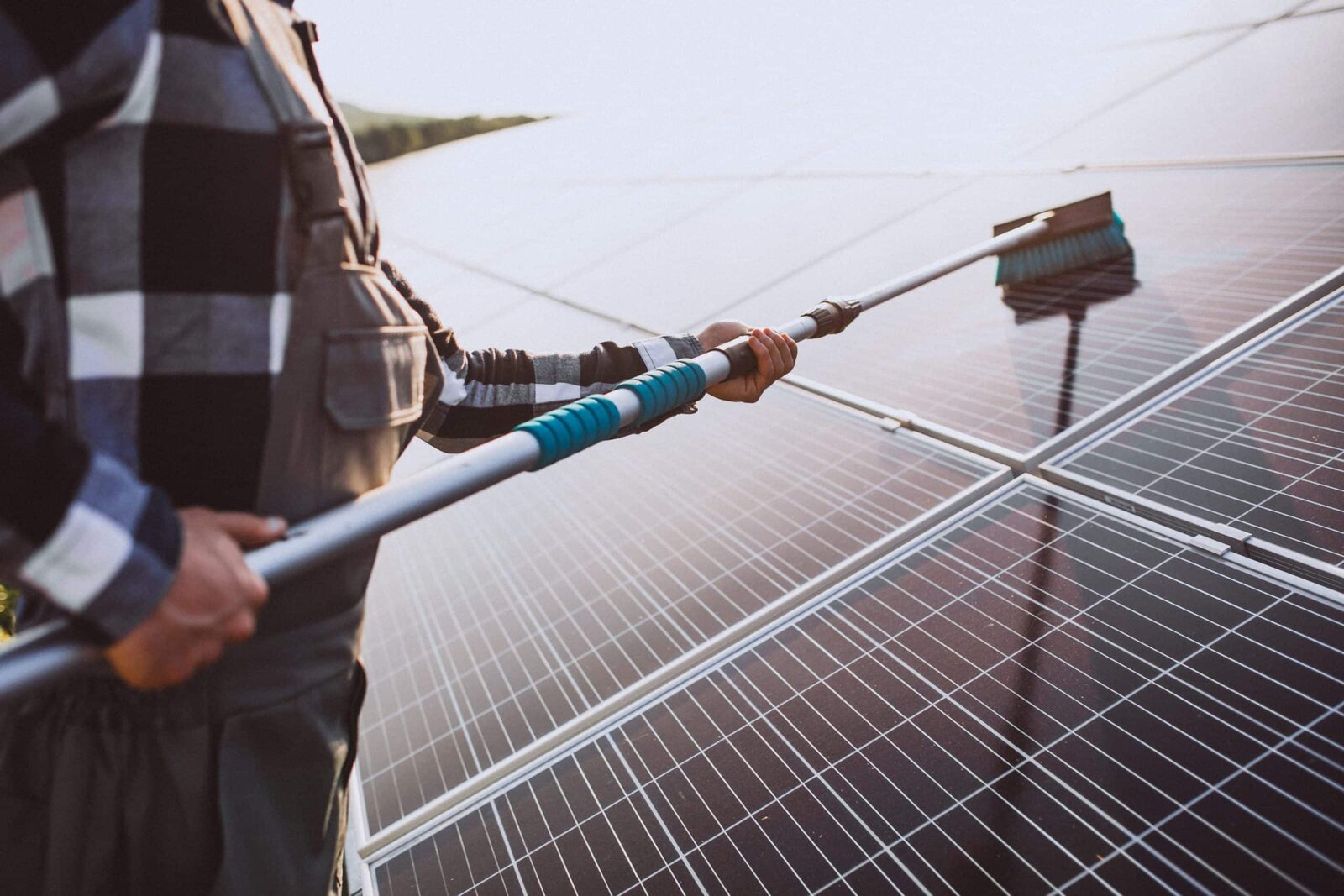
This is the most common method among residential solar users:
- Tools used: Soft brushes, squeegees, microfiber cloths
- Cleaning fluid: Usually just water—sometimes with mild soap
- Tips: Use deionized or distilled water to avoid mineral deposits
Time required: Around 30 to 60 minutes depending on size and accessibility.
2. Professional Cleaning Services
Often used by:
- People with two-story homes or roof-mounted arrays
- Commercial and utility-scale solar operators
- Those who prefer a “set it and forget it” approach
Professional cleaning ensures safe access and even coverage, though it can add to your maintenance costs.
3. Automated and Robotic Cleaning Systems
For large installations, especially in industrial solar farms, automated cleaning systems using rollers, rotating brushes, or air jets are becoming more popular. They:
- Operate on scheduled intervals
- Use less water
- Reduce labor needs (Jboor et al., 2023).
4. Waterless Cleaning Systems
Ideal for arid or drought-prone areas, these systems:
- Use compressed air or vibration-based piezoelectric technology
- Avoid water entirely
- Work well in desert or remote installations (Manzo et al., 2025).
5. Self-Cleaning Coatings
Hydrophobic and oleophobic nanocoatings are a rising trend. These bio-inspired surfaces repel water, dirt, and oils, reducing the frequency of manual cleaning. They’ve been shown to:
- Improve energy output by up to 30% over uncoated panels
- Reduce adhesion of sticky contaminants like bird droppings and pollen
- Last for months or even years with minimal maintenance.
When Do People Clean? How Do They Know It’s Time?
Real users most often clean panels:
- When energy output drops
- After visible dust buildup
- During seasonal cleaning (e.g., spring or post-pollen season)
Few users use sensors or automated systems to notify them, but smart monitoring tools can track energy losses and suggest optimal cleaning schedules (Sudharsan, 2024).
Challenges and Costs in Cleaning Solar Panels
Users report several common challenges:
- Rooftop access and safety risks
- Water availability, especially in desert regions
- Fear of scratching or damaging the panel surface
- Lack of knowledge about cleaning techniques
From a cost standpoint:
- Manual cleaning is cheapest but time-consuming
- Professional services cost more but are safer and more consistent
- Automation and coatings have higher upfront costs, but lower long-term maintenance (Saeed et al., 2024).
Do Clean Panels Actually Perform Better?
Absolutely. Research shows a significant boost in power generation:
- Up to 35% improvement after a deep clean
- 10–20% gains are common in dusty or polluted regions
- Even in cleaner climates, small gains add up over time (Chala et al., 2024).
Solar Panel Cleaning Tips for Homeowners
- Clean panels in cooler hours (morning or late afternoon) to avoid evaporation streaks
- Use soft brushes or cloths only
- Avoid high-pressure hoses or abrasive tools
- Use filtered or distilled water when possible
- If in doubt, hire a pro—especially for roof-mounted systems
Final Takeaway: A Clean Panel is a Happy Panel
If you want the most out of your solar energy system, don’t forget the basics: keep your solar panels clean. Whether you clean them yourself, use smart coatings, or invest in robotic cleaners, the goal is the same: maximizing performance and solar savings.
References:
- Chala, G., Sulaiman, S., Chen, X., & Shamsi, S. (2024). Effects of Nanocoating on the Performance of Photovoltaic Solar Panels in Al Seeb, Oman. Energies.
- Jboor, M., Younes, M., Zayed, N., Zainab, O., Diab, S., Al-Qadi, B., Alsadi, S., Foqha, T., Maghrabi, L., & Kanan, M. (2023). Automated Solar Panel Cleaning System. 2023 2nd International Engineering Conference on Electrical, Energy, and Artificial Intelligence (EICEEAI), 1-5.
- Manzo, M., Maymoun, M., Qamar, R., Rihani, Y., & Al-Jahran, A. (2025). A novel solar panel self-cleaning method based on piezoelectric films. Journal of Renewable and Sustainable Energy.
- M, S. (2024). AUTOMATIC SOLAR PANEL CLEANING SYSTEM. INTERANTIONAL JOURNAL OF SCIENTIFIC RESEARCH IN ENGINEERING AND MANAGEMENT.
- Tayel, S., El-Maaty, A., Mostafa, E., & Elsaadawi, Y. (2022). Enhance the performance of photovoltaic solar panels by a self-cleaning and hydrophobic nanocoating. Scientific Reports, 12.